
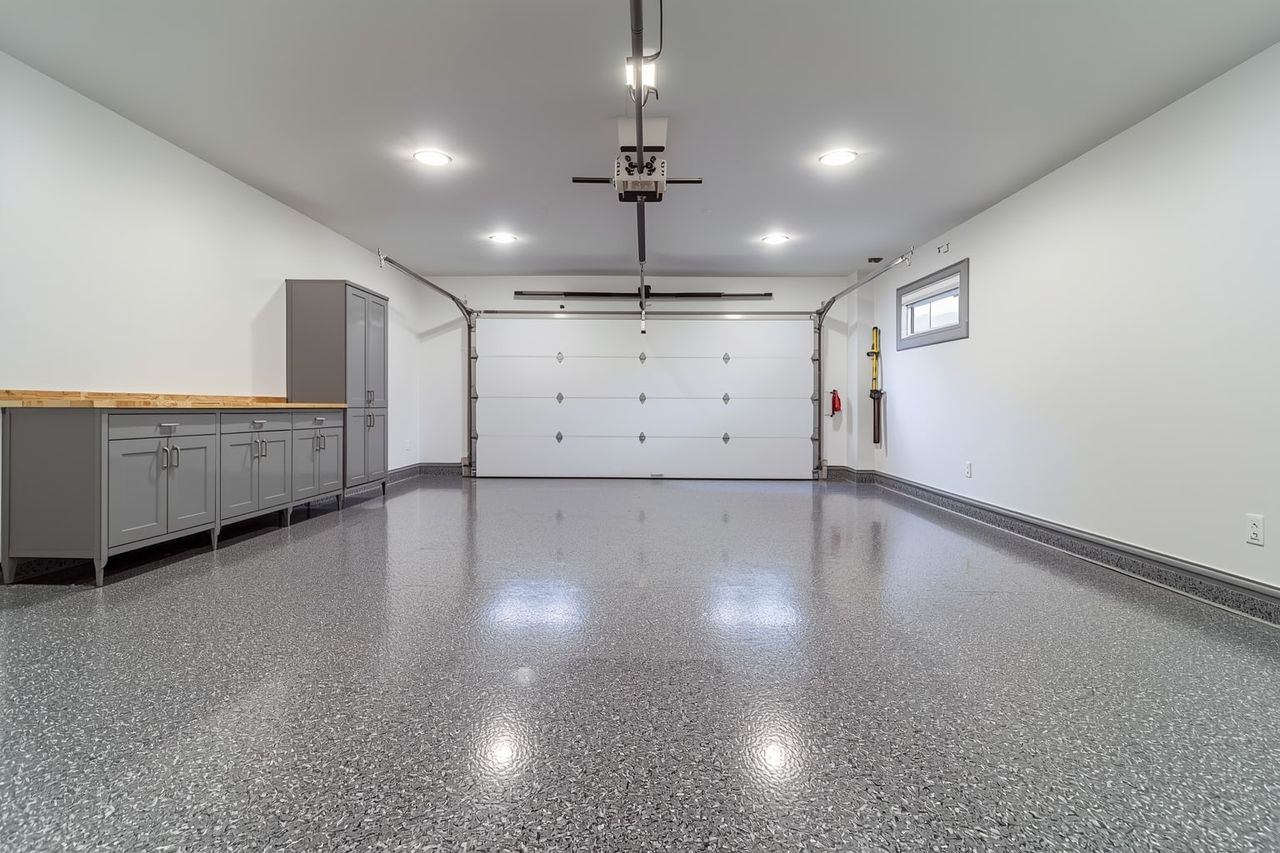
Residential services: Garage floor epoxy in Ottawa
A coated garage floor that stands up to road salt, hot tires and slush, because the slab is ground, repaired and checked before any coating goes down.
Why garage floors are hard on coatings
An Ottawa garage floor takes more abuse than any other floor in the house. From November to April, cars carry in slush loaded with road salt and brine, which sits in puddles and works into bare concrete until the surface flakes and pits. In summer, hot tires soften thin coatings and can pull them up as you drive away, which is why so many roll-on kits peel in tire-shaped patches within a year or two.
A properly installed epoxy system seals the concrete against salt and stains, cleans up with a squeegee and a hose, and makes the whole garage brighter. Whether it lasts comes down to what happens before it goes down.
Preparation decides how long it lasts
When a garage floor coating fails early, the cause is almost always the slab underneath: a coating laid over smooth, dusty, oily or damp concrete has nothing to grip. That's why preparation takes up most of our time on a garage.
- Degreasing oil and fluid stains, since coatings will not bond to contaminated concrete
- Checking for old sealers and paint, which have to come off before anything new goes down
- Checking the slab for moisture, because water vapour rising through the concrete can push a coating off from below
- Grinding the whole floor to open the surface and remove the weak top layer
- Filling cracks, chips and pitting, and dealing with control joints
- Vacuuming the grinding dust out of the surface before the first coat
Grinding versus acid etching
Most do-it-yourself kits tell you to etch the floor with a diluted acid and rinse it off. Etching can work on clean, bare concrete, but the results are uneven. It doesn't get through sealers, curing compounds or ground-in oil, it puts a lot of water into the slab right before you coat it, and any residue that isn't fully rinsed and neutralised weakens the bond.
We grind instead. A diamond grinder takes off the smooth top layer and whatever is sitting in it, and leaves an even, slightly rough texture across the whole floor that the primer can soak into and lock onto. It takes more time and equipment than etching, and it's the biggest single difference between a floor that lasts and one that peels.
What goes on the floor
A typical residential garage system has three layers, each with a job:
- An epoxy base coat that bonds to the ground concrete
- Coloured vinyl flakes broadcast into the wet base coat, which hide dust and tire marks, add texture underfoot and come in blends from light grey to charcoal
- A clear topcoat that locks the flakes in and takes the wear, chosen to resist scratching and the yellowing that epoxy alone can show in sunlight
If you'll be walking on a wet, salty floor all winter, a fine texture can be added to the topcoat for grip. We bring flake samples to the site visit and list the products and coats in the quote.
Timing in an Ottawa garage
Coatings need concrete that is warm enough to cure and dry enough to bond, so most unheated garages are coated between late spring and early fall. Heated garages can be done year-round. Plan to keep cars off the floor for a few days after the topcoat while it cures. The exact time depends on the products and the temperature, and it's written into your quote.
Cracks, joints and older floors
Most garage slabs have cracks and saw-cut control joints. Hairline cracks are filled so they don't show through. Wider cracks that are still moving can reappear through any coating over time, and we'll tell you at the site visit if one is likely to. Pitted, salt-damaged concrete can usually be repaired and coated, as long as the slab underneath is sound.
Looking after the floor
A coated floor is easy to keep. Squeegee out slush and rinse the salt off every few weeks in winter rather than letting brine dry on the surface. Sweep grit before it gets ground in, wash with a mild cleaner, and put a pad under kickstands, jack stands and trailer tongues. Avoid acid-based cleaners, which dull the topcoat.
Related projects
See the work.
Garage Floor Epoxy FAQ
Questions we get about this work.
Anything else? Ask us or call and we'll answer straight away.
Is a flake floor better than a solid colour?
For most garages, yes. Flakes hide dust, tire marks and small imperfections, add texture underfoot and make touch-ups less noticeable. Solid colours look sharp but show everything.
Why do DIY garage epoxy kits peel?
Usually because the floor was etched instead of ground, was not fully clean, or the coating went on too thin. Hot tires then soften it and pull it up. Kits also build a much thinner film than a professional system.
How long until I can park on it?
Light foot traffic is usually fine the next day. Cars have to wait several days while the coating cures, depending on the products and the temperature. Your quote gives the exact timing.
Can you coat a garage floor that has been painted or sealed?
In most cases, yes. Old paint and sealers are ground off so the new system bonds to bare concrete.
Will road salt damage an epoxy floor?
A sealed, coated floor resists salt far better than bare concrete, which is why so many Ottawa garages are coated. Rinse the salt off regularly in winter so brine does not sit and dry on the surface.
Do you coat basement floors and workshops too?
Yes. Basements, workshops and mudrooms with concrete floors can be coated the same way. Basement slabs are checked for moisture first, since floors below grade are more likely to have it.
Get started
Tell us about the space.
We'll arrange a site visit and send a written quote with the scope, the products and the schedule.